Breast Augmentation in Muzaffarnagar: A Surgeon's Guide to Implants, Technique & Recovery
What breast augmentation actually involves, the implant options available, how the surgery is performed, and what a realistic recovery looks like.
Breast augmentation, also known as augmentation mammoplasty, is not one of the most frequently asked-about cosmetic procedures in my OPD — but it is one of the most commonly discussed topics online, and hence one of the most surrounded by half-information. Whether you're exploring breast enlargement surgery to enhance body proportion, restore volume lost after pregnancy or weight loss, or address asymmetry, it helps to understand the procedure properly before your first consultation. In this article, I'll walk you through what breast augmentation involves, the types of breast implants available, how the surgery is performed, recovery timelines, and the factors that influence whether it's right for you.
What Is Breast Augmentation?
Breast augmentation is a surgical procedure that increases breast size and improves breast contour using breast implants (implant-based augmentation) or, in select cases, a patient's own fat (fat transfer breast augmentation). It's commonly sought for cosmetic breast enhancement, correcting breast asymmetry, restoring volume after pregnancy or breastfeeding, and as part of breast reconstruction following mastectomy in cancer patients.
Am I a Good Candidate for Breast Augmentation?
Breast augmentation may be considered by women who:
- Feel their natural breast size is smaller than they would like relative to their body proportion
- Have experienced a loss of breast volume after pregnancy, breastfeeding, or significant weight loss
- Have noticeable breast asymmetry between the two sides
- Are in good general health, are not pregnant or breastfeeding, and have realistic expectations from surgery
A detailed consultation and physical examination are essential to assess breast tissue quality, skin elasticity, chest wall anatomy, and your aesthetic goals before recommending a suitable approach.
Types of Breast Implants
Choosing the right implant is one of the most important decisions in breast augmentation surgery.
Silicone Breast Implants
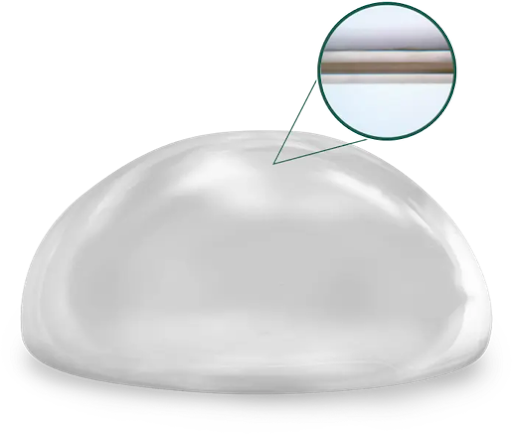
Silicone gel implants are widely used for their natural look and feel. Modern cohesive gel ("gummy bear") implants hold their shape well and are available in round or anatomical (teardrop) forms.
I prefer to use this type of implant because of its safety and longevity.
- Smooth implant
- Textured implant
- Polyurethane implant

Saline Breast Implants
Saline implants are filled with sterile saltwater and inserted empty before being filled, which allows a smaller incision. They tend to feel slightly firmer than silicone implants.
Implant Shape, Profile and Surface
- Round implants — provide fullness, particularly in the upper part of the breast
- Anatomical (teardrop) implants — mimic a more natural breast slope
- Implant profile (low, moderate, high, or ultra-high) — determines how much the implant projects forward
- Smooth vs. textured surface — affects how the implant interacts with surrounding tissue
Implant size is discussed in cubic centimetres (cc) rather than cup size, and is planned around your existing tissue, chest measurements, and aesthetic goals during consultation.
Incision and Implant Placement Options
There are several established approaches, and the right one depends on anatomy, implant type, and surgeon assessment:
Incision Sites
- Inframammary incision — placed in the fold beneath the breast, among the most commonly used approaches (most commonly used by me as well)
- Periareolar incision — placed around the areola border (risk of infection is higher)
- Transaxillary incision — placed in the armpit, leaving no scar on the breast itself (increases the risk of infection and incorrect placement)
Implant Placement
- Subglandular placement — implant positioned above the chest muscle, beneath the breast gland
- Submuscular (subpectoral) placement — implant positioned beneath the chest muscle
- Dual-plane placement — a combination approach used to balance upper pole fullness with a natural transition

The Breast Augmentation Procedure
Breast augmentation surgery is typically performed under general anaesthesia and takes roughly one to two hours, depending on technique and implant placement. It is usually done as a short-stay procedure. During surgery, the implant is inserted through the chosen incision and positioned precisely to achieve symmetry and the planned contour.
Recovery After Breast Augmentation
Recovery varies from patient to patient, but general milestones include:
Final breast shape and softness continue to settle over the following weeks to months as post-surgical swelling resolves.
As with any surgical procedure, breast augmentation carries potential risks — infection, capsular contracture, implant rupture, asymmetry, or the eventual need for revision — all of which deserve a thorough pre-operative discussion.
— Dr. Rohan Goel
Breast Augmentation Combined With Other Procedures
Some patients combine breast augmentation with a breast lift (mastopexy) if there is associated sagging, or plan it alongside body contouring procedures such as abdominoplasty. Whether combination surgery is appropriate depends on individual anatomy and is assessed case by case. I have been trained extensively in augmentation-mastopexy procedures in Spain, so consult us to get your dream shape.
Factors That Influence Breast Augmentation Cost
Breast augmentation cost varies from patient to patient based on several factors, including:
- Type and brand of implant selected (silicone vs. saline, standard vs. advanced cohesive gel)
- Surgical technique, incision type, and implant placement chosen
- Operating room, anaesthesia, and hospital stay charges
- Whether augmentation is combined with a breast lift or other procedure
- Pre- and post-operative care and follow-up requirements
Because these factors vary so widely, an accurate cost estimate can only be given after an in-person consultation and examination.
Why Choose a Qualified Plastic Surgeon
Breast augmentation is both a technical and an aesthetic procedure, and outcomes depend heavily on surgical planning, implant selection, and precision in execution. As a plastic, burns and reconstructive surgeon trained at Safdarjung Hospital, New Delhi, with an M.Ch in Plastic & Reconstructive Surgery and an ISAPS fellowship in aesthetic surgery from Spain, I approach every breast augmentation consultation with a detailed assessment of your anatomy, goals, and medical history before recommending a surgical plan.
Frequently Asked Questions
Book a Consultation
We also see patients travelling from Meerut, Saharanpur, and Shamli for breast augmentation consultations.
This article is for general information and does not replace an in-person medical consultation. Suitability, technique, and outcomes vary from patient to patient based on individual examination and health history.