Eyelid Surgery (Blepharoplasty)
Eyelid Surgery in Muzaffarnagar, also known as blepharoplasty, is a surgical procedure that can address excess eyelid skin, droopy upper eyelids and under-eye bags. Depending on the patient’s concerns and anatomy, upper eyelid surgery, lower eyelid surgery or a combination of both may be considered.
Quick Facts
Surgery Time
1 to 2 hours
Anesthesia
Local with sedation or general anesthesia
Stay Required
Outpatient (same-day discharge)
Initial Recovery
7 to 10 days for work and social life
Final Results
Major swelling resolves in 2 to 3 weeks; lines fade over several months
Understanding Your Options
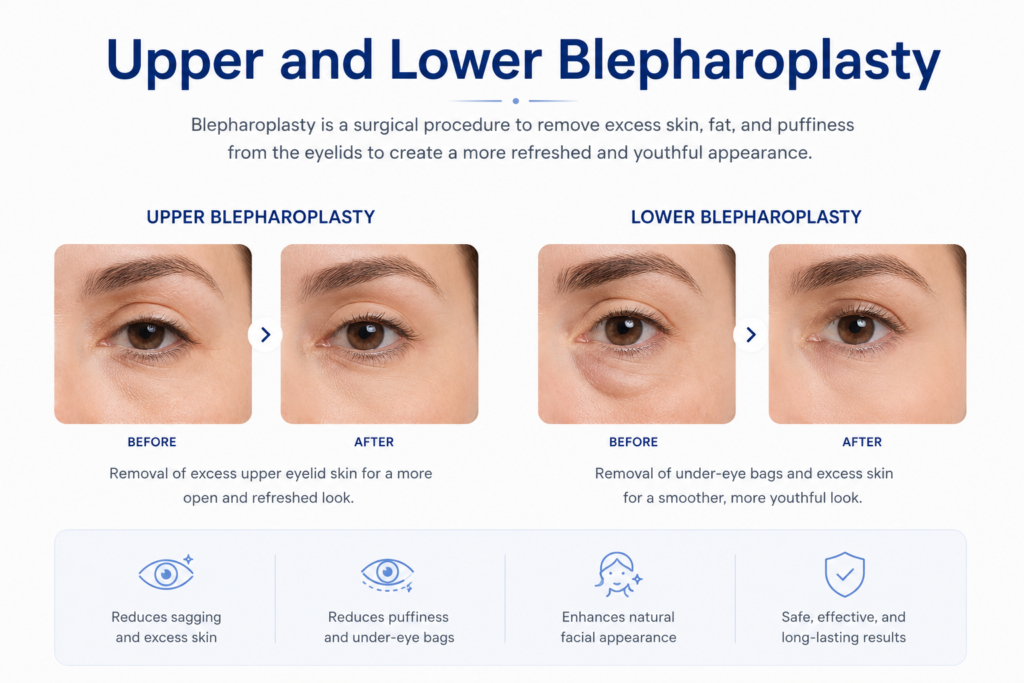
Patients can choose to treat the upper eyelids, lower eyelids, or both together.
- Upper Blepharoplasty (For Heavy, Hooded Eyes)
- The Problem: Aging causes the upper eyelid skin to stretch and lose elasticity. This creates a heavy fold that hangs down over the natural crease, sometimes even blocking peripheral vision.
- The Technique: A precise incision is hidden directly inside the natural horizontal crease of the upper lid.
- The Action: Excess skin is trimmed away, and small bands of muscle or bulging fat are adjusted.
- The Result: A clean, open eye appearance that looks naturally alert.
- Lower Blepharoplasty (For Under-Eye Bags & Shadows)
- The Problem: Natural fat pads beneath the eye shift forward over time, creating puffiness, deep tear-trough hollows, and dark shadows.
- The Techniques:
- Internal Approach (Transconjunctival): The incision is made completely inside the lower eyelid, leaving zero external scar. Best for fat repositioning.
- External Approach (Subciliary): A fine incision is made just beneath the lower lash line. Best if there is significant loose, crepey skin to trim.
- The Result: A smooth, flat transition from the lower eyelid directly into the cheek, eliminating a chronically tired look.
Step-by-Step: What Happens During Surgery?
Step 1: Comfort first
You receive anesthesia or deep sedation so you remain entirely relaxed and completely pain-free throughout the procedure.
Step 2: Strategic incisions
The surgeon places incisions carefully within the natural folds of the upper eyelid crease, inside the lower lid, or right beneath the lower lash line.
Step 3: Sculpting the area
Instead of completely emptying the fat (which causes a hollow, aged look), the surgeon meticulously resculpts and repositions the delicate fat pads.
Step 4: Seamless closing
The skin is closed using ultra-fine, delicate sutures or skin glue designed specifically for the sensitive eye area.
The Recovery Timeline
- Sensation: True pain is very low. You will mostly feel mild tightness, soreness, or watery eyes.
- Vision: Your sight may be slightly blurry due to protective, soothing ointments applied during surgery.
- Crucial Step: Apply clean, cold gel packs or chilled gauze for 10–15 minutes at a time to drastically reduce early swelling. Keep your head propped up on 2–3 pillows.
- The Peak: Swelling and bruising generally peak around day 3 or 4 and then begin to drop off rapidly.
- Stitch Removal: Fine sutures are removed at the clinic between days 5 and 7. Your eyelids will immediately feel much lighter.
- Hair Washing: You can gently wash your hair with mild baby shampoo once approved by the doctor.
- Social Return: By day 7 to 10, any remaining faint bruising can easily be camouflaged with concealer, allowing a confident return to desk jobs and social outings.
- Sun Protection: You must wear sunglasses outdoors to protect the healing incision lines from UV rays.
- Activity: Light cardiovascular exercise can usually be resumed after 2 to 3 weeks.
Side Effects vs. Warning Signs
|
Expected Normal Symptoms
|
Warning Signs (Call the Clinic Immediately)
|
|---|---|
|
Mild, temporary blurring from ointment
|
Sudden, severe pain or extreme pressure inside the eye socket
|
|
Watery eyes or slight sensitivity to light
|
Any sudden change or reduction in your vision
|
|
Minor bruising and swelling around the lids
|
Fresh, active bleeding dripping from the incisions
|