Cosmetic Scar Revision
Cosmetic scar revision is a highly specialized surgical or minimally invasive procedure designed to minimize the appearance of a scar, making it blend seamlessly with the surrounding skin tone and texture. While no scar can be erased completely, advanced plastic surgery techniques can dramatically change a scar’s size, width, direction, or elevation to restore natural facial and body aesthetics.
Quick Facts
Procedure Time
30 minutes to 1.5 hours (depending on complexity)
Anesthesia
Local anesthesia alone, local with sedation, or general anesthesia
Stay Required
Outpatient (same-day discharge)
Initial Recovery
5 to 7 days for surface healing; return to normal daily routines within a week
Final Results
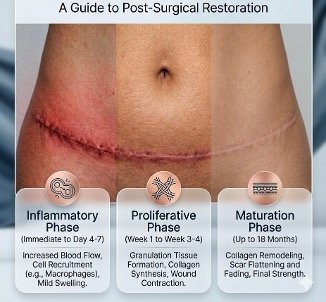
The refined line will remain pink initially; true scar maturation and fading take 6 to 12 months
Understanding Scar Types: What Can Be Fixed?
The choice of treatment depends heavily on how the scar originally formed and how the tissue healed.
- Hypertrophic Scars: Thick, raised, and red clusters of scar tissue that develop directly within the borders of the original wound. They often improve in appearance over time but can remain raised or tight.
- Keloids: Large, thick, puckered ridges of scar tissue that grow aggressively beyond the edges of the original injury. They can be itchy or painful and are caused by an overproduction of collagen.
- Contracture Scars: Scars that pull the edges of the skin tightly together, often restricting normal muscle or joint movement (common after burn injuries).
- Atrophic / Depressed Scars: Sunken or pitted scars that sit below the surrounding skin, frequently caused by acne, chickenpox, or deep childhood cuts.
How Cosmetic Scar Revision Works
Depending on the scar’s depth, location, and severity, a combination of structural and surface techniques is utilized:
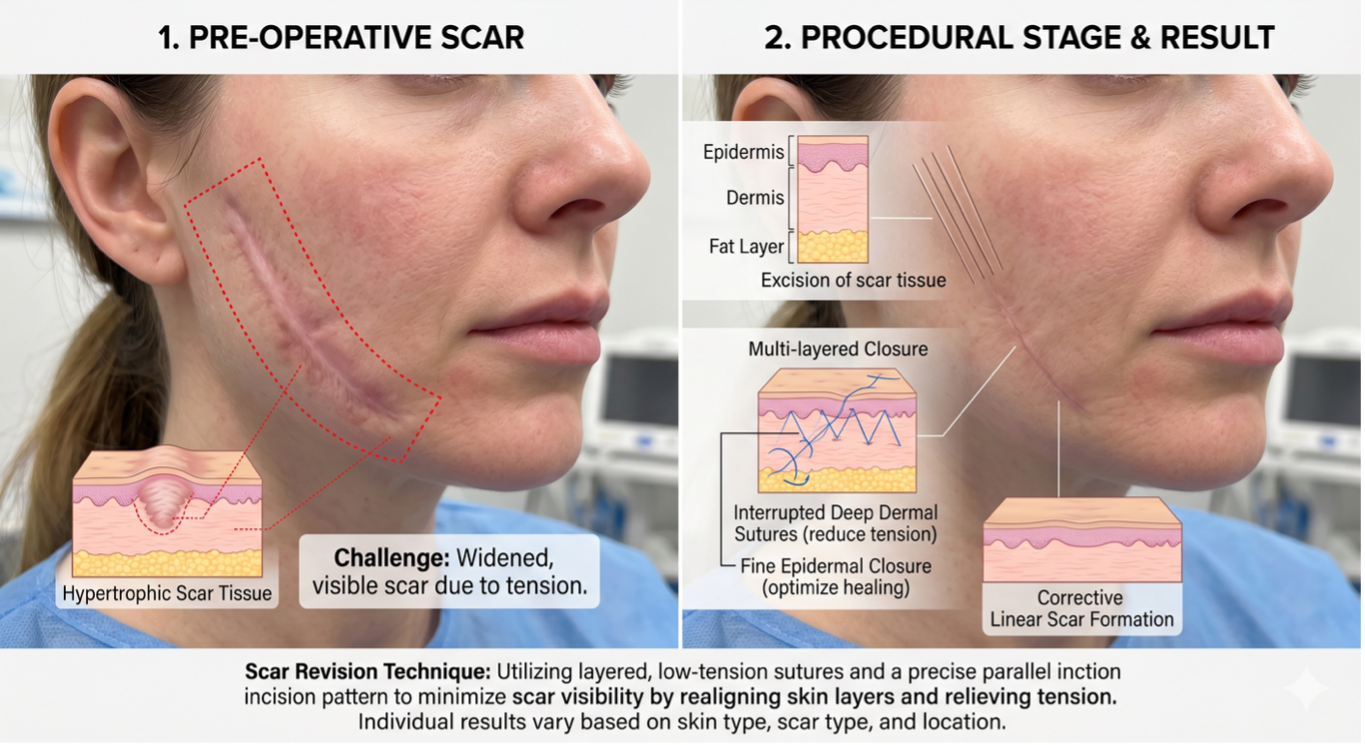
- Surgical Scar Excision (The Clean Slate)
- The Action: The old, wide, or irregular scar is completely and meticulously cut out.
- The Technique: The surgeon utilizes geometric closure methods (such as a Z-Plasty or W-Plasty). By rearranging the skin edges into tiny, zig-zag patterns, the surgeon aligns the new, fine incision with the body’s natural skin creases and tension lines.
- The Result: Relieves tension on the skin and makes the eventual new scar line incredibly difficult for the eye to track.
- Dermal Subcision & Fat Grafting (For Sunken Scars)
- The Action: A small, specialized needle is inserted beneath a pitted or depressed scar to gently break up the tight, fibrous bands pulling the skin downward.
- The Cushion: Micro-droplets of your body’s own fat or a dermal filler are then gently layered underneath to lift the crater flush with the surrounding skin surface.
- Surface Resurfacing (For Textural Blending)
- The Action: Mechanical dermabrasion or precise fractional lasers are used to gently abrade or vaporize the top layers of the scar tissue.
- The Result: Stimulates fresh collagen growth, smooths out rough edges, and blends the scar’s pigmentation with your natural skin tone.
Who is an Ideal Candidate?
- Timing is Key: In most cases, a scar should be allowed to heal for at least 6 to 12 months after the initial injury before undergoing revision surgery, as many scars naturally soften and improve on their own.
Healthy Skin Dynamics: Ideal candidates are non-smokers who do not have active skin infections in the target zone and possess realistic expectations about scar minimization.
The Recovery Timeline
- Sensation: True surgical pain is minimal. You may experience a mild ache, tightness, or localized swelling around the revised area, easily managed with over-the-counter or mild prescribed relievers.
- Suture Care: Keep the area meticulously clean and dry. If fine external sutures are used, they are typically removed in the clinic between days 5 and 7 to prevent "track marks."
- Movement: Avoid any heavy lifting or stretching motions that pull against the newly repaired skin line.
- The Taping Phase: Once stitches are removed, you may be instructed to wear medical-grade silicone gel sheets or surgical paper tape over the line. Keeping constant, gentle pressure on the healing tissue stops it from thickening.
The Pink Phase: The new line will look pink or slightly red. This is a healthy sign of active blood flow (neovascularization) aiding the deep tissue repair.
- Sun Protection: This is the most critical rule of scar revision. Healing scar tissue is highly sensitive to UV rays. You must apply medical-grade SPF 30+ or keep the area covered outdoors; sun exposure will permanently darken the scar (hyperpigmentation).
- Softening Results: Over the course of a year, the pink line will slowly fade to a faint, flat, skin-colored line that beautifully mimics the texture of the surrounding skin.
Side Effects vs. Warning Signs
|
Expected Normal Symptoms
|
Warning Signs (Call the Clinic Immediately)
|
|---|---|
|
Light pinkness, swelling, and localized firmness
|
Sudden, severe throbbing pain or spreading redness
|
|
Minor itching around the healing incision line
|
Signs of infection (pus, foul odor, or heat)
|
|
Slight peeling or flaking if lasers were used
|
Any separation or opening of the revised skin edges. A fever rising above 101°F (38.3°C)
|