Vaginal Rejuvenation (Vaginoplasty)
Vaginoplasty is a surgical procedure designed to repair and tighten the vaginal canal and supporting tissues when laxity or structural changes cause functional concerns. It may be considered after childbirth or other changes affecting the vaginal tissues and pelvic floor.
The goal of vaginoplasty is to restore or improve the support and structure of the vaginal tissues while preserving healthy anatomy. The appropriate surgical approach depends on the individual’s anatomy, symptoms, previous childbirth or surgery, and overall health.
Quick Facts
Surgery Time
1 to 2 hours
Anesthesia
General anesthesia or deep intravenous sedation
Stay Required
Outpatient (same-day discharge)
Initial Recovery
7 to 10 days of downtime; return to remote or office desk work within 7 to 14 days
Final Results
Structural tightening is permanent; internal healing and tissue softening settle completely over 6 to 8 weeks
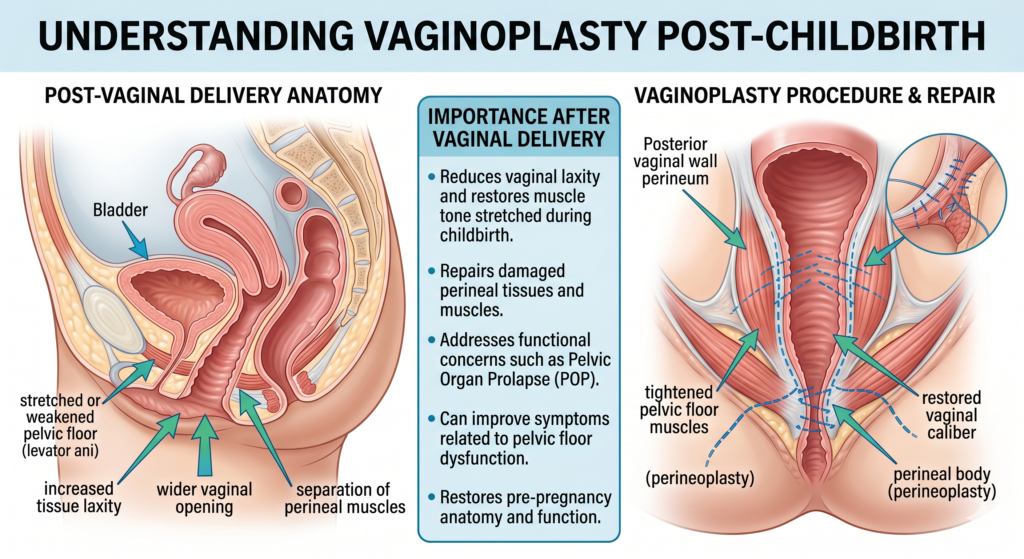
Step-by-Step: How the Repair is Performed
Step 1: Accessing the Laxity
The surgeon makes a discreet incision along the posterior (back) wall of the vaginal canal, safely hidden inside the vagina.
Step 2: Muscle Reconstruction
The stretched, separated levator ani and perineal muscles are pulled back together in the midline.
Step 3: Permanent Muscle Tightening
Heavy-duty, dissolvable internal structural sutures tightly secure these muscle bands, instantly building a firm pelvic floor framework and narrowing the internal canal.
Step 4: Mucosal Skin Reduction
Any excess, stretched-out lining tissue (mucosa) from inside the vaginal wall is precisely trimmed away.
Step 5: Layered Closure
The internal incision is sealed using fine, self-dissolving stitches that do not require removal.
The Recovery Timeline
- Sensation: Your pelvis will feel deep muscle soreness, pressure, or a heavy ache, which is well-managed with prescribed comfort medications.
- Resting Position: Rest comfortably in bed with your legs slightly elevated. Minor spotting or a light pink discharge is completely normal during these early days.
- Increased Mobility: Walking around the house gently is highly encouraged to maintain healthy blood circulation and prevent deep vein thrombosis (DVT).
- Avoiding Strain: To protect the pelvic floor from downward pressure, you must take stool softeners as prescribed to completely prevent straining during bowel movements.
- Work Return: Most patients feel completely comfortable returning to remote desk work or standard office schedules within 10 to 14 days, provided prolonged sitting can be minimized with regular standing breaks.
- Exercise Progress: Low-impact walking can be stepped up steadily, but you must avoid heavy squats, pushing, or lifting for 6 weeks.
Side Effects vs. Warning Signs
|
Expected Normal Symptoms
|
Warning Signs (Call the Clinic Immediately)
|
|---|---|
|
Deep pelvic muscle soreness and a heavy pressure sensation
|
Severe, sharp throbbing pain that fails to respond to medication
|
|
Pink, watery fluid or light blood spotting on a pad
|
Active, continuous bright red bleeding from the vaginal vault. A fever rising above 101°F (38.3°C)
|
|
Temporary localized swelling around the vaginal opening
|
Signs of infection (foul-smelling internal discharge or extreme heat)
|
Frequently Asked Questions (FAQ's)
Trusted guidance to help you feel informed and confident about your surgical journey..
To safeguard the internal muscle repair, there must be absolutely no sexual intercourse, tampon insertion, or douching for a full 6 to 8 weeks. Introducing any internal friction or pressure too early can cause muscle separation or stitch failure.
- While a vaginoplasty is primarily designed to tighten the internal vaginal canal and repair separated muscles, bringing the pelvic floor structures back into proper alignment frequently provides secondary structural support to the bladder neck, often improving mild stress urinary incontinence.
- Yes, very frequently. Combining these two procedures is an excellent option for patients looking for comprehensive post-childbirth restoration. It allows you to address both external cosmetic symmetry and internal structural tightness in a single anesthesia session with one unified recovery period