
Dr.Rohan Goel – Plastic & Aesthetic Surgery | Muzaffarnagar

Author name: Dr. Rohan Goel

Uncategorized

Breast Augmentation in Muzaffarnagar: Implants, Procedure, Recovery and What to Expect

Breast Surgery — Muzaffarnagar Breast Augmentation in Muzaffarnagar: A Surgeon’s Guide to Implants, Technique & Recovery What breast augmentation actually involves, the implant options available, how the surgery is performed, and what a realistic recovery looks like. RG Dr. Rohan Goel Plastic, Burns & Reconstructive Surgeon · RG Plastic Surgery, Muzaffarnagar Breast augmentation, also known as augmentation mammoplasty, is not one of the most frequently asked-about cosmetic procedures in my OPD — but it is one of the most commonly discussed topics online, and hence one of the most surrounded by half-information. Whether you’re exploring breast enlargement surgery to enhance body proportion, restore volume lost after pregnancy or weight loss, or address asymmetry, it helps to understand the procedure properly before your first consultation. In this article, I’ll walk you through what breast augmentation involves, the types of breast implants available, how the surgery is performed, recovery timelines, and the factors that influence whether it’s right for you. — What Is It What Is Breast Augmentation? Breast augmentation is a surgical procedure that increases breast size and improves breast contour using breast implants (implant-based augmentation) or, in select cases, a patient’s own fat (fat transfer breast augmentation). It’s commonly sought for cosmetic breast enhancement, correcting breast asymmetry, restoring volume after pregnancy or breastfeeding, and as part of breast reconstruction following mastectomy in cancer patients. — Candidacy Am I a Good Candidate for Breast Augmentation? Breast augmentation may be considered by women who: Feel their natural breast size is smaller than they would like relative to their body proportion Have experienced a loss of breast volume after pregnancy, breastfeeding, or significant weight loss Have noticeable breast asymmetry between the two sides Are in good general health, are not pregnant or breastfeeding, and have realistic expectations from surgery A detailed consultation and physical examination are essential to assess breast tissue quality, skin elasticity, chest wall anatomy, and your aesthetic goals before recommending a suitable approach. — Implant Options Types of Breast Implants Choosing the right implant is one of the most important decisions in breast augmentation surgery. Silicone Breast Implants Silicone gel implants are widely used for their natural look and feel. Modern cohesive gel (“gummy bear”) implants hold their shape well and are available in round or anatomical (teardrop) forms. I prefer to use this type of implant because of its safety and longevity. Smooth implant Textured implant Polyurethane implant Saline Breast Implants Saline implants are filled with sterile saltwater and inserted empty before being filled, which allows a smaller incision. They tend to feel slightly firmer than silicone implants. Implant Shape, Profile and Surface Round implants — provide fullness, particularly in the upper part of the breast Anatomical (teardrop) implants — mimic a more natural breast slope Implant profile (low, moderate, high, or ultra-high) — determines how much the implant projects forward Smooth vs. textured surface — affects how the implant interacts with surrounding tissue Implant size is discussed in cubic centimetres (cc) rather than cup size, and is planned around your existing tissue, chest measurements, and aesthetic goals during consultation. — Surgical Approach Incision and Implant Placement Options There are several established approaches, and the right one depends on anatomy, implant type, and surgeon assessment: Incision Sites Inframammary incision — placed in the fold beneath the breast, among the most commonly used approaches (most commonly used by me as well) Periareolar incision — placed around the areola border (risk of infection is higher) Transaxillary incision — placed in the armpit, leaving no scar on the breast itself (increases the risk of infection and incorrect placement) Implant Placement Subglandular placement — implant positioned above the chest muscle, beneath the breast gland Submuscular (subpectoral) placement — implant positioned beneath the chest muscle Dual-plane placement — a combination approach used to balance upper pole fullness with a natural transition — The Surgery The Breast Augmentation Procedure Breast augmentation surgery is typically performed under general anaesthesia and takes roughly one to two hours, depending on technique and implant placement. It is usually done as a short-stay procedure. During surgery, the implant is inserted through the chosen incision and positioned precisely to achieve symmetry and the planned contour. — Recovery Recovery After Breast Augmentation Recovery varies from patient to patient, but general milestones include: ✓ Wearing a supportive surgical bra for the initial recovery period as advised ✓ Mild to moderate swelling, tightness, and soreness in the first one to two weeks ✓ Gradual return to light daily activities within a week to ten days ✓ Avoiding strenuous exercise, heavy lifting, and upper-body strain for several weeks as guided by your surgeon ✓ Follow-up visits to monitor healing, implant position, and wound care Final breast shape and softness continue to settle over the following weeks to months as post-surgical swelling resolves. As with any surgical procedure, breast augmentation carries potential risks — infection, capsular contracture, implant rupture, asymmetry, or the eventual need for revision — all of which deserve a thorough pre-operative discussion. — Dr. Rohan Goel — Combination Surgery Breast Augmentation Combined With Other Procedures Some patients combine breast augmentation with a breast lift (mastopexy) if there is associated sagging, or plan it alongside body contouring procedures such as abdominoplasty. Whether combination surgery is appropriate depends on individual anatomy and is assessed case by case. I have been trained extensively in augmentation-mastopexy procedures in Spain, so consult us to get your dream shape. — Cost Factors That Influence Breast Augmentation Cost Breast augmentation cost varies from patient to patient based on several factors, including: Type and brand of implant selected (silicone vs. saline, standard vs. advanced cohesive gel) Surgical technique, incision type, and implant placement chosen Operating room, anaesthesia, and hospital stay charges Whether augmentation is combined with a breast lift or other procedure Pre- and post-operative care and follow-up requirements Because these factors vary so widely, an accurate cost estimate can only be given after an in-person consultation and examination. Why Choose a Qualified Plastic Surgeon Breast augmentation is both a
Uncategorized

Split Earlobe Repair in Muzaffarnagar: Why Jewellers’ Glue Is Not a Fix, and Surgical Treatment

Ear & Scar Care — Muzaffarnagar Split Earlobe Repair in Muzaffarnagar: Why Jewellers’ Glue Is Not a Fix & Surgical Treatment A plastic surgeon’s honest guide to why torn or stretched earlobes need real surgical repair — not adhesive shortcuts — and what the correction actually involves. RG Dr. Rohan Goel Plastic, Burns & Reconstructive Surgeon · RG Plastic Surgery, Muzaffarnagar Split earlobe before and after surgical repair — RG Plastic Surgery, Muzaffarnagar A torn or split earlobe is one of those problems patients often live with for years — partly because it seems like a minor cosmetic issue, and partly because a well-meaning jeweller has “fixed” it temporarily with an adhesive. In my practice, I see split earlobes at every stage: a thin worn-out groove, a partial tear that opens during earring wear, and complete splits where the lobe has torn all the way through. — On Examination What We Look For at the First Visit Every earlobe is examined closely under good light before deciding on a repair plan — the position of the piercing, how much the tract has thinned, whether the split is partial or complete, and how the lobe sits in relation to the rest of the ear. This assessment is what decides whether a patient needs a straightforward split repair, a stretched-hole correction, or repair combined with re-piercing planning for the future. — Why It Happens Why Do Earlobes Split or Tear? Earlobe splitting usually develops gradually rather than happening all at once. Common causes include: Long-term wear of heavy earrings, especially gold jhumkas or studded jewellery, which stretch the piercing hole over years A sudden pull or snag — a child tugging an earring, a dupatta or phone catching on it, or an earring getting caught while dressing Gradual thinning and stretching of the piercing tract, which eventually gives way under normal weight Multiple piercings placed too close together on the same lobe, weakening the skin between them Old, enlarged gauge piercings that thin the surrounding tissue over time — The Distinction Why Jewellers’ Glue or Paste Is Not a Real Fix This is something I want to be very direct about, because it’s a genuinely common practice in local jewellery shops: when a lobe tears or a piercing hole stretches, some jewellers apply an adhesive paste to stick the skin edges together, or use it to hold an earring in a stretched or partially torn hole so it stops moving. This might look like it has “closed” the split — but it is not a wound repair. It is simply glue holding two skin surfaces together on the surface. There are several reasons this approach is a problem rather than a solution: The torn skin edges are never actually approximated or healed at a tissue level — the split reopens as soon as the glue wears off or the earring is worn again Adhesives not meant for skin can cause irritation, allergic reaction, or contact dermatitis on already-injured skin Trapping unclean skin surfaces together with paste can seal in bacteria and increase the risk of infection It delays proper treatment — the longer a split is patched over, the more the tissue thins and stretches, making eventual surgical correction more complex It gives false reassurance, so patients often only come to a surgeon after the lobe has torn again — sometimes worse than before If your earlobe has split or a piercing hole has stretched and torn, the only way to properly and permanently correct it is a surgical repair — not adhesive, and not simply avoiding earrings and hoping it closes on its own. — Treatment How Is a Split Earlobe Repaired Surgically? Earlobe repair (also called lobuloplasty) is a straightforward outpatient procedure done under local anaesthesia. The torn or stretched edges of the lobe are trimmed and the tissue is re-approximated in layers, so the repair heals as genuine, strong skin rather than a surface patch. Depending on the type of split, I plan the repair as one of the following: 01   Complete Split Repair Where the lobe has torn all the way through — repaired as a fresh wound in layers. 02   Partial or Stretched-Hole Repair Where the piercing has enlarged or partially torn without fully splitting. 03   Repair with Re-Piercing For patients who want to wear earrings again — the lobe can often be re-pierced in a new position once the area has fully healed, usually after a few months. The procedure typically takes under an hour, and most patients go home the same day. Sutures are usually removed after about a week, and normal activities can generally be resumed quickly, with your surgeon’s specific aftercare instructions to be followed for the best healing. Proper surgical repair heals the split as genuine, strong tissue — not a surface patch that reopens the moment the glue wears off. — Dr. Rohan Goel — Recovery What to Expect After Surgery ✓ Mild swelling or tenderness for the first few days, which settles on its own ✓ A fine scar line along the repair, which typically fades and becomes much less noticeable over time ✓ Avoiding earring wear on the repaired lobe until your surgeon confirms the area has fully healed ✓ Follow-up to plan re-piercing, if desired, once healing is complete When Should You See a Plastic Surgeon? If your earlobe has torn — whether suddenly from an accident or gradually from years of heavy jewellery — it’s worth getting it assessed properly rather than relying on adhesives or repeated re-piercing through weakened tissue. Early, correct surgical repair generally gives a cleaner result and avoids the tissue thinning that comes from years of makeshift fixes. Book a Consultation Goel Nursing Home Mahavir Chowk, Muzaffarnagar OPD: Mon – Fri, 5:00 – 7:00 PM Vardhman Hospital Jansath Road, Kamal Nagar OPD: Mon & Wed, 2:00 – 4:00 PM We also see patients travelling from Meerut, Saharanpur, and Shamli for earlobe repair consultations. Share This Article WhatsApp Facebook Share

Uncategorized

Ear Keloid Treatment in Muzaffarnagar: Causes, Prevention and Surgical Removal

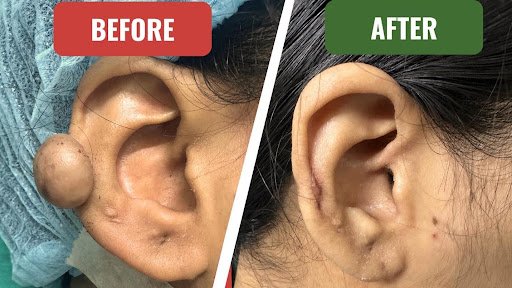
Ear & Scar Care — Muzaffarnagar Ear Keloid Treatment: Causes, Prevention & Surgical Removal A plastic surgeon’s guide to why keloids form on the ear, how they differ from an ordinary scar, and what a realistic treatment plan looks like. RG Dr. Rohan Goel Plastic, Burns & Reconstructive Surgeon · RG Plastic Surgery, Muzaffarnagar BEFORE → AFTER Ear keloid before and after surgical removal — RG Plastic Surgery, Muzaffarnagar If you have a firm, raised, often itchy or tender lump on your earlobe or ear cartilage that has grown steadily since a piercing, injury, or even a small infection — you may be dealing with a keloid. As a plastic and reconstructive surgeon who deals with scar biology on a daily basis, ear keloids are among the most common cosmetic concerns I see in my OPD in Muzaffarnagar, and also one of the most misunderstood. In this article, I want to walk you through what an ear keloid actually is, why it happens, how it differs from an ordinary scar, and what your realistic treatment options look like. 01 What is it What Is an Ear Keloid? A keloid is an abnormal, overgrown scar that develops when the skin’s healing response doesn’t switch off at the right time. Instead of the wound healing flat and settling within a few weeks, the scar tissue keeps growing — often well beyond the boundaries of the original injury. On the ear, this most commonly happens at the earlobe after piercing, but it can also follow cartilage piercings (helix, tragus, conch), ear surgery, acne, insect bites, or even minor trauma that you may not clearly remember. Ear keloids typically present as a smooth, rounded, rubbery lump that is pink, red, or darker than the surrounding skin. They can be itchy, tender, or occasionally painful, and they tend to enlarge slowly over months. Left untreated, some keloids on the earlobe can grow quite large and heavy, distorting the shape of the ear. 02 The distinction Keloid vs. Hypertrophic Scar Patients often use “keloid” loosely for any raised scar, but the distinction matters for treatment planning. Hypertrophic Scar Stays within the boundary of the original wound and often flattens on its own over one to two years. True Keloid Extends beyond the original wound margins, keeps growing rather than settling, and has a much higher tendency to come back after simple excision. This is exactly why keloids need a structured, combination treatment approach rather than a single quick fix. 03 Risk factors Why Do Some People Get Ear Keloids and Others Don’t? A few factors make keloid formation more likely: 01Genetic predisposition — a family history of keloids is one of the strongest risk factors 02Darker skin types, where keloids are reported more frequently 03Younger age at the time of piercing or injury, particularly the teenage years 04Location on the body — ears, chest, shoulders, and jawline are especially prone 05Tension, infection, or trauma at the wound site during healing 06A previous keloid elsewhere on the body, which raises the chance of another 04 Treatment Treatment Options for Ear Keloids There is no single “best” treatment for every keloid — the right approach depends on the size, location, duration, and whether it’s a first occurrence or a recurrence after previous treatment. In my practice, I generally consider these options, often in combination: 01 Intralesional Steroid Injections For smaller or earlier keloids, a series of corticosteroid injections directly into the scar tissue can flatten and soften the lump considerably, and is often the first line of treatment. This usually needs to be repeated over several sessions spaced a few weeks apart. 02 Silicone Sheets & Pressure Therapy Silicone gel sheeting or pressure clip-on earrings can help control smaller keloids or reduce recurrence after surgical removal, particularly on the earlobe where a pressure device can be worn discreetly. 03 Surgical Excision Larger or long-standing keloids, especially those that haven’t responded to injections, are best managed surgically. Excision is planned carefully to preserve the natural contour of the ear or earlobe, since shape and symmetry matter as much as removing the lump. Excision alone carries a real risk of recurrence — which is why it is rarely done in isolation. 04 Combination Therapy — the durable fix The most durable results come from a combination approach: surgical excision followed by steroid injections and/or pressure therapy during the healing phase, sometimes supplemented with silicone sheeting. 05 Other Adjuncts Depending on the case, cryotherapy, laser therapy, or radiotherapy after excision may also be considered for stubborn or recurrent keloids. These are typically reserved for select cases and discussed individually during consultation. Combination therapy is what most reduces the chance of the keloid returning — the single biggest concern with keloid treatment anywhere on the body. — Dr. Rohan Goel Prevention Can Ear Keloids Be Prevented? If you’re prone to keloids or are considering a new piercing, a few precautions genuinely help: Get piercings done with proper sterile technique and aftercare Avoid unnecessary trauma, tight jewelry, or repeated handling of a healing piercing Treat any signs of infection or irritation early rather than waiting If you have a personal or family history of keloids, discuss this with a surgeon before elective piercings or minor ear procedures Once treated, follow the prescribed pressure therapy or steroid schedule fully — stopping early is the most common reason for recurrence When Should You See a Plastic Surgeon? Any earlobe or ear lump that keeps growing, doesn’t settle after a few weeks, or has come back after a previous removal is worth a proper surgical opinion rather than home remedies or repeated self-treatment. Early intervention, before the keloid becomes large, generally gives a better cosmetic outcome and a simpler treatment course. In my OPD, I assess the size, duration, and history of prior treatment before recommending whether injections, surgery, or a combination approach is right for you. Because ear keloids have a genuine tendency to recur, the treatment plan and the follow-up schedule matter just

Uncategorized

Lip Reduction Surgery: A Plastic Surgeon’s Guide to Cheiloplasty

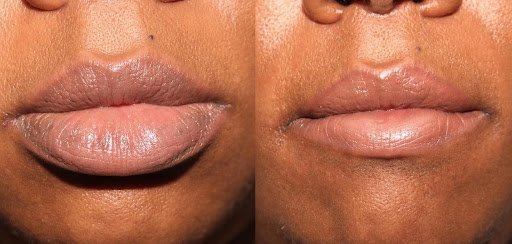
Full, well-proportioned lips are often admired, but for some people, naturally large or protruding lips can feel out of balance with the rest of the face. As a plastic and reconstructive surgeon with fellowship-level aesthetic training, I regularly meet patients in Muzaffarnagar, Meerut, Saharanpur, and Shamli who ask whether their lip size can be safely and permanently reduced. This article explains what lip reduction surgery (cheiloplasty) involves, who it may be suitable for, and what the recovery process generally looks like. What Is Lip Reduction Surgery? Lip reduction surgery, medically termed reduction cheiloplasty, is a procedure designed to decrease the volume or projection of the upper lip, lower lip, or both. It involves removing a carefully measured strip of tissue from the inner (mucosal) surface of the lip, so that any resulting scar remains hidden inside the mouth rather than on the visible skin surface. The goal is to bring lip volume into better proportion with the nose, chin, and overall facial structure. This is distinct from lip lift or lip reshaping procedures, which alter lip position or the show of the vermillion border rather than reducing bulk. During a consultation, I assess the specific anatomical concern before recommending an approach. Who Considers Lip Reduction? People typically explore this procedure for reasons such as: A feeling that lip size is disproportionate to other facial features Congenitally large lips (macrocheilia) present since childhood or adolescence Lip enlargement following prior trauma, certain medical conditions, or as a rare consequence of some syndromic or inflammatory conditions Functional discomfort, such as difficulty with lip closure or speech in select cases of macrocheilia A thorough clinical evaluation is essential before proceeding, since lip anatomy, skin quality, and the underlying cause of enlargement all influence surgical planning. The Surgical Procedure Reduction cheiloplasty is generally performed under local anaesthesia with sedation, or under general anaesthesia depending on the extent of correction and patient preference. Broadly, the steps include: Careful pre-operative marking to determine the amount of tissue to be conservatively removed, keeping both lips symmetric and natural in movement An incision placed on the inner mucosal surface of the lip, avoiding any external scar Excision of the marked strip of excess mucosal and submucosal tissue Meticulous closure using dissolvable sutures The procedure typically takes about one to two hours, depending on whether one or both lips are being addressed, and is usually performed on a day-care or short-stay basis. Recovery and Aftercare As with any oral or perioral surgery, some swelling, mild discomfort, and temporary difficulty with speech or eating firm foods is expected in the initial days. General aftercare guidance includes: A soft or liquid diet for the first several days Regular saline or antiseptic mouth rinses to maintain oral hygiene Avoiding excessive lip movement, spicy food, and smoking during early healing Prescribed medication for swelling and discomfort as advised Follow-up visits to monitor healing of the intra-oral incision Because the incision is placed inside the mouth, visible external scarring is not expected, and oral mucosa generally heals well. Individual healing timelines vary, and I discuss a personalised recovery plan with every patient during consultation. Risks and Considerations Like all surgical procedures, lip reduction carries general risks including infection, bleeding, temporary numbness, asymmetry, or changes in lip sensation. A detailed discussion of risks, alternatives, and realistic expectations is an essential part of informed consent, and I encourage every patient to raise questions openly during the consultation before deciding to proceed. Why Consultation Matters Lip reduction is a precise procedure where even small measurement differences can affect symmetry and lip function, including speech and expression. My training in plastic and reconstructive surgery, along with my association with the International Society of Aesthetic Plastic Surgery (ISAPS) as a resident member, informs a conservative, anatomy-first approach to aesthetic facial procedures. Every case is evaluated individually — this article is for general educational purposes and is not a substitute for an in-person clinical assessment. Consult Dr. Rohan Goel If you are exploring lip reduction surgery or have questions about facial aesthetic procedures, you can consult Dr. Rohan Goel at any of the following locations: Goel Nursing Home, Chaudhary Charan Singh Market, Mahavir Chowk, Muzaffarnagar (OPD: Mon–Fri, 5–7 PM) Vardhman Hospital, Aesthetic Surgery OPD, 3rd KM, Jansath Road, Kamal Nagar, Muzaffarnagar (OPD: Mon & Wed, 2–4 PM) Patients from Meerut, Saharanpur, Shamli, and surrounding areas are welcome to schedule a consultation to discuss whether this procedure may be appropriate for their individual case.

Uncategorized

Rhinoplasty in Muzaffarnagar: A Complete Guide to Nose Surgery by Dr. Rohan

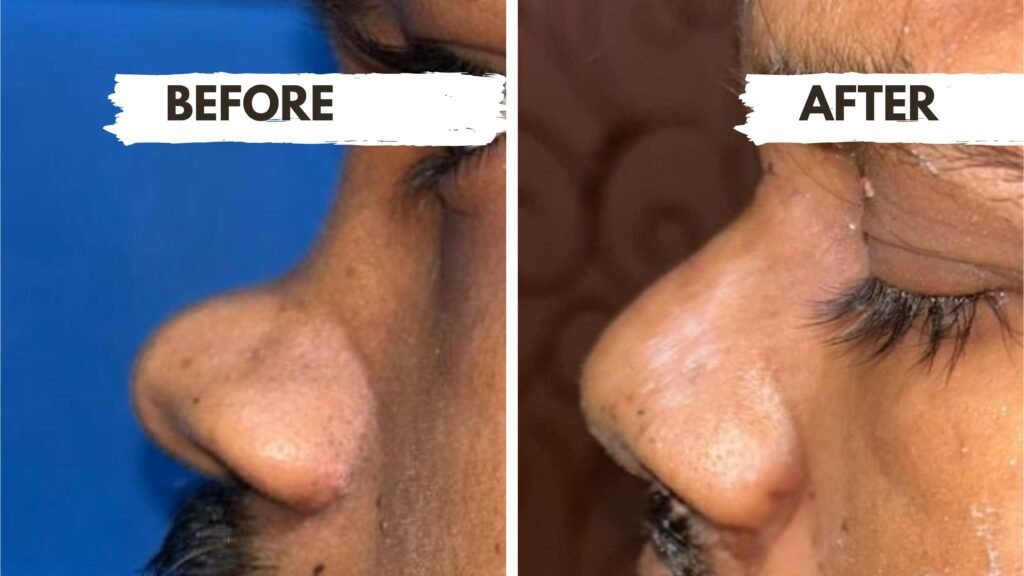
Everything you need to know about cost, recovery, and choosing the right surgeon for nose reshaping surgery I’m Dr. Rohan Goel, Assistant Professor of Plastic, Burns and Reconstructive Surgery at Muzaffarnagar Medical College, and I practice at Goel Nursing Home, Muzaffarnagar. My training in rhinoplasty and facial reconstruction comes from my M.Ch in Plastic and Reconstructive Surgery at Vardhman Mahavir Medical College & Safdarjung Hospital, New Delhi — one of India’s busiest referral centres for reconstructive and aesthetic surgery — where I managed everything from routine cosmetic rhinoplasty to complex nasal reconstruction after trauma and cancer resection. One of the most common questions I hear during my evening OPD consultations is about rhinoplasty — popularly known as nose surgery or nose job. Patients often come in curious, a little nervous, and full of questions: Will it look natural? How much does it cost? How long is recovery? In this article, I want to walk you through everything I discuss with my patients, so you can make an informed decision before booking your first consultation. What Is Rhinoplasty? Rhinoplasty is a surgical procedure that reshapes the nose — whether to correct a bump, refine the tip, narrow the nostrils, fix breathing issues, or restore the nose after an injury. It’s one of the most requested procedures in facial plastic surgery, and for good reason: the nose is the central feature of the face, and even small changes can make a meaningful difference in facial harmony and self-confidence. There are two broad categories worth knowing: Cosmetic rhinoplasty – performed purely to improve the shape, size, or proportion of the nose. Functional rhinoplasty – performed to correct breathing problems, often caused by a deviated septum, and frequently combined with cosmetic goals. Many of my patients are surprised to learn these two can be addressed in the same surgery, giving them both better breathing and a more balanced profile. Who Is a Good Candidate for Nose Surgery? During consultations, I generally look for a few things before recommending rhinoplasty: Physical maturity – the nose should be fully developed, usually after age 16–18. Good overall health – no uncontrolled medical conditions that could affect healing. Realistic expectations – rhinoplasty refines and enhances; it doesn’t create a completely different face. A specific concern – whether it’s a dorsal hump, a wide nasal bridge, a drooping tip, or post-injury correction. If you’ve been self-conscious about your nose in photos, or you struggle to breathe through one nostril, it’s worth having a proper consultation to understand your options. The Rhinoplasty Procedure: What Actually Happens Patients often ask me to explain the surgery in simple terms, so here’s the short version: Anesthesia – performed under general or local anesthesia with sedation, depending on complexity. Technique – I use either an open approach (a small incision at the base of the nose) or closed approach (incisions hidden inside the nostrils), chosen based on your specific case. Reshaping – cartilage and bone are carefully reshaped, reduced, or grafted to achieve the desired structure. Duration – typically 1.5 to 3 hours depending on complexity. Splint placement – a nasal splint is applied to support the new shape during initial healing. Most rhinoplasty procedures at Goel Nursing Home are done as a day-care or short-stay surgery, meaning you won’t need a long hospital admission. During my residency at Safdarjung Hospital, I worked on a high volume of nasal and facial cases — from purely cosmetic rhinoplasty to reconstruction after maxillofacial trauma and head-and-neck cancer surgery. That range of experience matters even for a straightforward cosmetic case, because it means I’ve learned to anticipate the anatomical variations and complications that a surgeon who only does cosmetic work might not encounter as often. Recovery Timeline After Rhinoplasty This is where I spend a lot of time educating patients, because recovery expectations matter as much as the surgery itself. Timeframe What to Expect Day 1–2 Swelling, mild discomfort, nasal splint in place Day 7 Splint and stitches (if any) removed Week 2 Most visible bruising and swelling subsides Month 1 Back to normal daily activities and light exercise Month 3–6 Refined shape becomes more visible Month 12 Final results settle completely The nose continues to subtly refine for up to a year, which is why I always ask patients to be patient with the process and attend follow-up visits. Rhinoplasty Cost: What Influences the Price One of the most searched questions is naturally, “how much does rhinoplasty cost.” The honest answer is: it depends on several factors, including: Complexity of the case (primary vs. revision rhinoplasty) Whether cartilage grafting is required Combined functional correction (septoplasty) Type of anesthesia used Hospital and post-operative care included Rather than quoting a number without examining you, I always recommend an in-person or video consultation so I can give you an accurate estimate specific to your anatomy and goals. Beware of clinics that quote a fixed price without ever seeing your nose in person — every rhinoplasty is different. Why Choose a Qualified Plastic Surgeon for Your Nose Job Rhinoplasty is often called the most technically demanding procedure in facial plastic surgery, because the margin for error is small and the results are permanently visible on your face. When researching a rhinoplasty surgeon near you, I’d encourage you to check: Board certification and formal training in plastic surgery (an M.Ch or equivalent postgraduate qualification, not just a short-term course) Before-and-after photos of actual patients (not stock images) A clear, honest consultation process Hospital-backed facilities with proper anesthesia and emergency support On my end, here’s what I bring to the table: an M.Ch in Plastic and Reconstructive Surgery and an M.S in General Surgery, both from Vardhman Mahavir Medical College & Safdarjung Hospital, New Delhi. I’m a life member of NABI (National Academy of Burns India), an associate life member of APSI (Association of Plastic Surgeons of India), and a resident member of ISAPS (International Society of Aesthetic Plastic Surgeons). I currently teach as Assistant Professor of Plastic, Burns and Reconstructive

Plastic Surgery vs Cosmetic Surgery
Uncategorized

Plastic Surgery vs Cosmetic Surgery: What’s the Difference? | Complete Guide by Dr. Rohan Goel

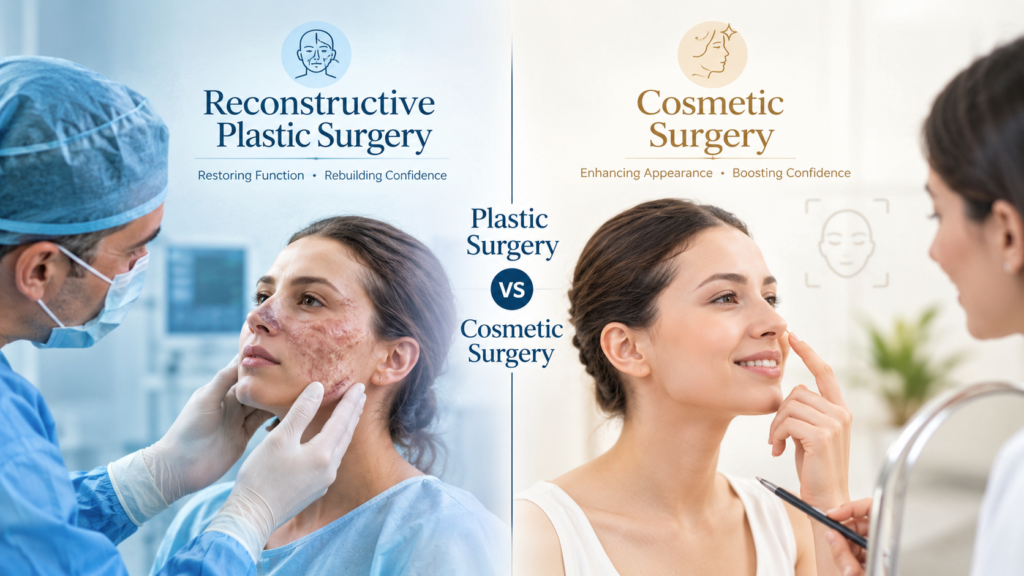
Plastic Surgery vs Cosmetic Surgery: What’s the Difference? Plastic Surgery vs Cosmetic Surgery is one of the most searched topics by people planning to improve their appearance or undergo reconstructive treatment. While many people use these terms interchangeably, they are not the same. Plastic surgery focuses on restoring function and repairing damaged body parts, whereas cosmetic surgery is performed primarily to enhance appearance. Understanding the difference between Plastic Surgery vs Cosmetic Surgery can help you choose the right procedure and the right specialist for your needs. What is Plastic Surgery? Plastic surgery is a specialized branch of medicine that focuses on reconstructing, restoring, or repairing damaged or abnormal body parts. It helps improve both the function and appearance of the affected area. Plastic surgery is commonly recommended for: Burn injuries Birth defects such as cleft lip and palate Facial trauma after accidents Hand injuries Skin cancer reconstruction Scar revision Reconstructive breast surgery The primary goal of plastic surgery is to restore normal function while also improving the patient’s appearance and quality of life. What is Cosmetic Surgery? Cosmetic surgery is performed mainly to improve a person’s physical appearance. These procedures are elective, meaning they are chosen by the patient rather than being medically necessary. Popular cosmetic surgery procedures include: Rhinoplasty (Nose Surgery) Liposuction Gynecomastia Surgery Facelift Eyelid Surgery (Blepharoplasty) Chin Augmentation Ear Correction Surgery (Otoplasty) Lip Enhancement Cosmetic surgery helps patients achieve better facial harmony, body contour, and increased self-confidence. Plastic Surgery vs Cosmetic Surgery: Key Differences Plastic Surgery Cosmetic Surgery Restores function and appearance Improves appearance only Often medically necessary Usually elective Treats burns, trauma and birth defects Enhances facial and body features Includes reconstructive procedures Includes aesthetic procedures Focuses on health and function Focuses on beauty and confidence Although there are differences between Plastic Surgery vs Cosmetic Surgery, both specialties require advanced surgical training and should only be performed by qualified surgeons. Benefits of Plastic Surgery Plastic surgery offers several medical and functional benefits, including: Restores damaged tissues Improves body function Corrects congenital defects Reduces pain caused by deformities Improves physical comfort Enhances confidence and quality of life Benefits of Cosmetic Surgery Cosmetic surgery offers aesthetic and psychological benefits, such as: Better facial balance Improved body contour Increased self-confidence Younger and refreshed appearance Long-lasting aesthetic improvements Better overall self-image Who is a Good Candidate? You may be a suitable candidate if you: Are in good general health Have realistic expectations Do not smoke or are willing to quit before surgery Maintain a stable body weight Understand the recovery process Have consulted a qualified plastic surgeon A detailed consultation is always recommended before deciding on any surgical procedure. Recovery After Plastic or Cosmetic Surgery Recovery depends on the type of procedure performed. Minor procedures may require only a few days of recovery, while major reconstructive surgeries may take several weeks. For faster recovery: Follow your surgeon’s instructions carefully. Take prescribed medications on time. Avoid smoking and alcohol. Attend all follow-up appointments. Eat a healthy, protein-rich diet. Avoid strenuous physical activities until approved by your surgeon. Is Plastic Surgery Safe? Both plastic surgery and cosmetic surgery are generally safe when performed by a qualified and experienced plastic surgeon in an accredited medical facility. Like any surgical procedure, there are potential risks, including infection, bleeding, swelling, and delayed healing. Choosing an experienced surgeon significantly reduces these risks. Why Choose Dr. Rohan Goel? Dr. Rohan Goel is an experienced Plastic and Cosmetic Surgeon dedicated to providing safe, personalized, and evidence-based treatment. Every patient receives an individualized treatment plan based on their medical condition, aesthetic goals, and overall health. Whether you are considering reconstructive surgery after an injury or cosmetic surgery to enhance your appearance, Dr. Rohan Goel focuses on achieving natural-looking results while maintaining the highest standards of patient safety. Frequently Asked Questions (FAQs) What is the main difference between Plastic Surgery vs Cosmetic Surgery? Plastic surgery restores function and repairs damaged tissues, while cosmetic surgery is mainly performed to improve appearance. Is cosmetic surgery a type of plastic surgery? Cosmetic surgery is often considered a subspecialty within the broader field of plastic surgery, but it specifically focuses on aesthetic enhancement. Which surgery has a longer recovery time? Recovery depends on the procedure. Major reconstructive surgeries usually require more recovery time than minor cosmetic procedures. Is plastic surgery permanent? Many results are long-lasting, although aging, lifestyle, and overall health can influence the outcome over time. How do I choose the right surgeon? Always choose a qualified and experienced plastic surgeon who has expertise in the specific procedure you are considering.

Scroll to Top