Ear Keloid Treatment: Causes, Prevention & Surgical Removal
A plastic surgeon's guide to why keloids form on the ear, how they differ from an ordinary scar, and what a realistic treatment plan looks like.
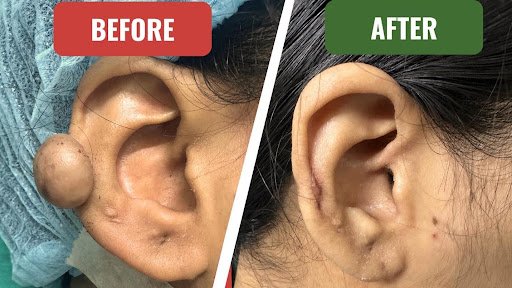 BEFORE → AFTER
Ear keloid before and after surgical removal — RG Plastic Surgery, Muzaffarnagar
If you have a firm, raised, often itchy or tender lump on your earlobe or ear cartilage that has grown steadily since a piercing, injury, or even a small infection — you may be dealing with a keloid.
As a plastic and reconstructive surgeon who deals with scar biology on a daily basis, ear keloids are among the most common cosmetic concerns I see in my OPD in Muzaffarnagar, and also one of the most misunderstood. In this article, I want to walk you through what an ear keloid actually is, why it happens, how it differs from an ordinary scar, and what your realistic treatment options look like.
What is it
What Is an Ear Keloid?
A keloid is an abnormal, overgrown scar that develops when the skin's healing response doesn't switch off at the right time. Instead of the wound healing flat and settling within a few weeks, the scar tissue keeps growing — often well beyond the boundaries of the original injury. On the ear, this most commonly happens at the earlobe after piercing, but it can also follow cartilage piercings (helix, tragus, conch), ear surgery, acne, insect bites, or even minor trauma that you may not clearly remember.
Ear keloids typically present as a smooth, rounded, rubbery lump that is pink, red, or darker than the surrounding skin. They can be itchy, tender, or occasionally painful, and they tend to enlarge slowly over months. Left untreated, some keloids on the earlobe can grow quite large and heavy, distorting the shape of the ear.
The distinction
Keloid vs. Hypertrophic Scar
Patients often use "keloid" loosely for any raised scar, but the distinction matters for treatment planning.
Hypertrophic Scar
Stays within the boundary of the original wound and often flattens on its own over one to two years.
True Keloid
Extends beyond the original wound margins, keeps growing rather than settling, and has a much higher tendency to come back after simple excision.
This is exactly why keloids need a structured, combination treatment approach rather than a single quick fix.
Risk factors
Why Do Some People Get Ear Keloids and Others Don't?
A few factors make keloid formation more likely:
Treatment
Treatment Options for Ear Keloids
There is no single "best" treatment for every keloid — the right approach depends on the size, location, duration, and whether it's a first occurrence or a recurrence after previous treatment. In my practice, I generally consider these options, often in combination:
Intralesional Steroid Injections
For smaller or earlier keloids, a series of corticosteroid injections directly into the scar tissue can flatten and soften the lump considerably, and is often the first line of treatment. This usually needs to be repeated over several sessions spaced a few weeks apart.
Silicone Sheets & Pressure Therapy
Silicone gel sheeting or pressure clip-on earrings can help control smaller keloids or reduce recurrence after surgical removal, particularly on the earlobe where a pressure device can be worn discreetly.
Surgical Excision
Larger or long-standing keloids, especially those that haven't responded to injections, are best managed surgically. Excision is planned carefully to preserve the natural contour of the ear or earlobe, since shape and symmetry matter as much as removing the lump. Excision alone carries a real risk of recurrence — which is why it is rarely done in isolation.
Combination Therapy — the durable fix
The most durable results come from a combination approach: surgical excision followed by steroid injections and/or pressure therapy during the healing phase, sometimes supplemented with silicone sheeting.
Other Adjuncts
Depending on the case, cryotherapy, laser therapy, or radiotherapy after excision may also be considered for stubborn or recurrent keloids. These are typically reserved for select cases and discussed individually during consultation.
Combination therapy is what most reduces the chance of the keloid returning — the single biggest concern with keloid treatment anywhere on the body.
— Dr. Rohan GoelPrevention
Can Ear Keloids Be Prevented?
If you're prone to keloids or are considering a new piercing, a few precautions genuinely help:
- Get piercings done with proper sterile technique and aftercare
- Avoid unnecessary trauma, tight jewelry, or repeated handling of a healing piercing
- Treat any signs of infection or irritation early rather than waiting
- If you have a personal or family history of keloids, discuss this with a surgeon before elective piercings or minor ear procedures
- Once treated, follow the prescribed pressure therapy or steroid schedule fully — stopping early is the most common reason for recurrence
When Should You See a Plastic Surgeon?
Any earlobe or ear lump that keeps growing, doesn't settle after a few weeks, or has come back after a previous removal is worth a proper surgical opinion rather than home remedies or repeated self-treatment. Early intervention, before the keloid becomes large, generally gives a better cosmetic outcome and a simpler treatment course.
In my OPD, I assess the size, duration, and history of prior treatment before recommending whether injections, surgery, or a combination approach is right for you. Because ear keloids have a genuine tendency to recur, the treatment plan and the follow-up schedule matter just as much as the procedure itself.
We also see patients travelling from Meerut, Saharanpur, and Shamli for keloid and scar revision consultations.